
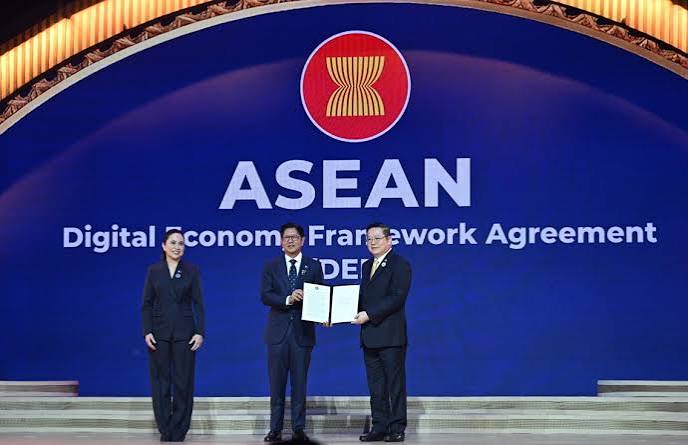
ASEAN DEFA aims to transform regional digital trade, strengthen cybersecurity and unlock a US$1 trillion digital economy by 2035 through greater integration and business opportunities.
The Association of Southeast Asian Nations (ASEAN) has taken a major step towards building a more integrated digital economy following the signing of the ASEAN Digital Economy Framework Agreement (DEFA), aimed at facilitating cross-border digital trade, strengthening business connectivity and creating new growth opportunities across the region.
As ASEAN’s first standalone, legally binding agreement on the digital economy, DEFA establishes common rules and frameworks to make digital business operations easier, safer and more seamless across its member states.
According to the e-Conomy SEA 2026 report by Google, Temasek and Bain & Company, ASEAN’s digital economy is projected to reach US$368 billion in 2026 and exceed US$1 trillion by 2035 if its current growth trajectory continues.
The agreement is expected to reduce trade barriers, improve regional connectivity and strengthen ASEAN’s competitiveness in the rapidly expanding global digital economy.
DEFA negotiations were launched in September 2023 during the 23rd ASEAN Economic Community Council (AECC) Meeting and concluded in May 2026. ASEAN Member States officially signed the agreement on the sidelines of the 49th ASEAN Summit on 14 November 2026.
Nine Key Areas Covered by ASEAN DEFA
The agreement brings together nine key areas to support the development of an integrated regional digital economy:
-
- Digital trade
-
- Cross-border electronic commerce
-
- Digital identities and authentication
-
- Electronic payments
-
- Data protection and privacy
-
- Online safety and cybersecurity
-
- Competition policy
-
- Data and innovation
-
- Cooperation on emerging areas and technologies
These commitments are designed to create a more predictable and business-friendly digital environment while supporting innovation and cross-border economic activities.
Key Benefits for Businesses and MSMEs
One of the major benefits of DEFA is the reduction of costs and administrative barriers associated with digital trade.
The agreement promotes wider acceptance and use of electronic trade documents, including certificates of origin, phytosanitary certificates, bills of lading, electronic signatures and electronic invoicing.
Improved rules for express shipments will also help simplify cross-border transactions, reduce paperwork and make regional trade more efficient, particularly for micro, small and medium-sized enterprises (MSMEs).
DEFA also establishes clearer and more predictable rules for cross-border data flows, including financial data. Businesses will not be required to store data locally when transfers are made for commercial purposes.
Additionally, the agreement protects businesses from being required to disclose their source code and cryptographic information as a condition for market entry.
ASEAN has also committed to maintaining a moratorium on customs duties on electronic transmissions, subject to a review five years after the agreement enters into force.
The framework further creates opportunities for businesses to adopt emerging technologies, particularly artificial intelligence (AI) and financial technology (fintech).
Greater interoperability in digital identities and electronic payments is expected to make it easier for businesses to develop innovative solutions, reach customers and expand their operations across ASEAN markets.
Strengthening Digital Security and Consumer Trust
Beyond economic opportunities, DEFA places emphasis on building a safer and more secure digital environment.
The agreement strengthens regional cooperation in data protection, cybersecurity, combating online scams and repairing submarine telecommunications cables.
These measures aim to improve the resilience of ASEAN’s digital infrastructure while building consumer confidence in online transactions and digital services.
A more secure and trusted digital ecosystem is also expected to support businesses seeking to expand their digital operations across the region.
Implementation to Begin Following Signing
DEFA will enter into force 180 days after its signing and will supersede the 2019 ASEAN Electronic Commerce Agreement once it takes effect.
The full text of the agreement is expected to be published on the ASEAN Secretariat’s website in early 2027.
ASEAN will subsequently focus on implementing the agreement’s commitments and translating them into practical initiatives that deliver tangible benefits for businesses and consumers.
The agreement represents a significant milestone in ASEAN’s digital integration efforts, laying the groundwork for a more connected, competitive and trusted regional digital economy.
Photo — ASEAN






Leave a Reply