
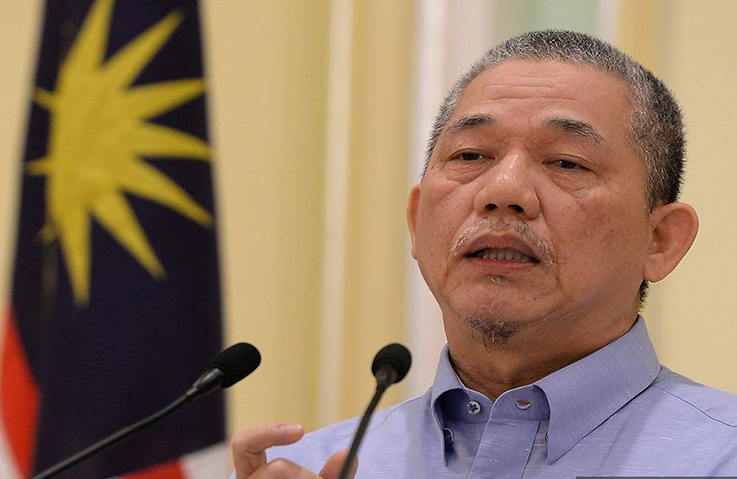
Deputy Prime Minister Datuk Seri Fadillah Yusof said safety must be a top priority in developing energy storage technology, as system failures could result in serious hazards, including thermal runaway and fires.
Fadillah, who is also Energy Transition and Water Transformation Minister, said every BESS installation must comply with high standards of safety, quality and performance, as well as meet technical requirements and international best practices.
He said having access to the technology alone was insufficient, stressing the importance of ensuring that all battery systems entering the Malaysian market were safe and met established requirements.
“It is not enough to simply possess the technology. We must also ensure that the technology entering the country is safe.
“That is why the development of this certification is crucial — not only to protect consumers but also to prevent explosions and fires that could endanger users and the general public,” he said.
He was speaking at the launch of the BESS certification pilot project by BESSC Sdn Bhd in Kapar today.
Although the certification scheme is voluntary, Fadillah encouraged companies planning to install battery energy storage systems to seek guidance and adopt established standards to ensure operational safety and better returns on investment.
He also called on relevant ministries and agencies, including the Department of Standards Malaysia and the Energy Commission, to work together in developing standards suited to domestic requirements, which could eventually serve as benchmarks at regional and international levels.
Fadillah said Malaysia currently has an installed renewable energy capacity of nearly 14 gigawatts (GW), with solar energy serving as one of the main drivers of growth.
The government has set a target for renewable energy sources to account for 35 per cent of the country’s electricity generation capacity by 2030, increasing to 70 per cent by 2050.
The targets are part of Malaysia’s broader efforts to strengthen energy security, reduce dependence on fossil fuels and achieve net-zero carbon emissions as early as 2050.
However, he noted that the growing adoption of solar energy also posed challenges to electricity grid stability, as solar power generation is intermittent and dependent on weather conditions.
This makes energy storage systems increasingly important in balancing fluctuations in electricity supply.
Fadillah explained that BESS technology enables excess solar energy generated during the day to be stored for use at night, while also helping stabilise the electricity grid by regulating the amount of energy supplied to the system.
He added that the expansion of the BESS industry would create significant opportunities for local companies, particularly in battery manufacturing and system installation.
Among the government’s initiatives to accelerate the adoption of battery storage technology is the Malaysia Battery Energy Storage System (MyBEST) tender, which involves a power capacity of 400 megawatts (MW) and an energy storage capacity of 1,600 megawatt-hours (MWh).
Additionally, the sixth Large-Scale Solar (LSS6) programme requires the inclusion of battery storage components in relevant projects, with a combined power capacity of 1,250 MW and energy storage capacity of 5,000 MWh.
– BERNAMA





Leave a Reply