
By Melita Koulmandas, Founder and CEO, Song Saa Collective
Tourism in Cambodia is growing. It brings jobs, investment and opportunity, but growth alone is not success. What matters is whether tourism strengthens the places it depends on, or slowly erodes them.
For many years, sustainable tourism has focused on reducing harm. Lower energy use, less waste, fewer emissions, better sourcing.
These measures matter, but in the face of overtourism, climate instability and biodiversity loss, they are not enough. Regeneration asks a harder question: can tourism leave a place better than it found it?
That means looking beyond the boundaries of any one property or business. A destination is a living system of landscapes, water, biodiversity, communities, culture and local economies.
Weaken those systems and the destination weakens too. Seen this way, regenerative tourism means understanding a place’s ecological, social and cultural carrying capacity and strengthening what makes tourism possible.

When development moves too fast, a place can lose the very thing people came for. Communities are pushed to the margins. Local identity gives way to tourism that looks the same everywhere. The challenge is to grow without consuming the natural, cultural and social assets on which tourism depends.
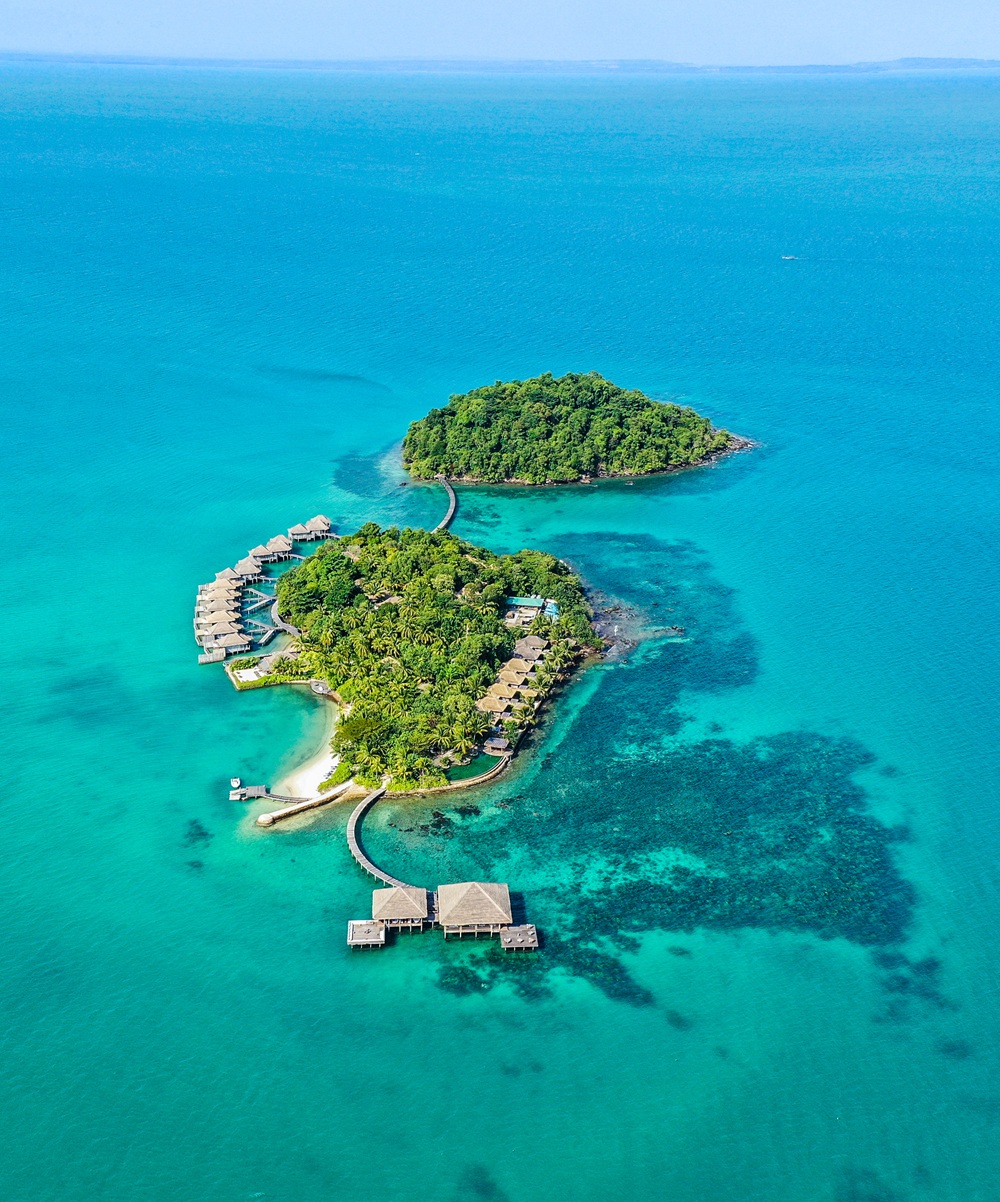
That understanding has shaped almost twenty years of our work in Cambodia. For six years before Song Saa Private Island opened, we worked with the local community to protect the six-hectare house reef surrounding the islands. It became the starting point for Cambodia’s first marine reserve. As the reef recovered, we saw the return of species including barracuda and spotted stingrays.

Through the Song Saa Foundation, the work expanded into marine conservation, education, waste recovery and community livelihoods across the Koh Rong Archipelago.
These were never separate from hospitality. The health of the reef and the strength of local communities shape the resilience of the destination. Regeneration is not a programme added to a tourism business. It begins with recognising that the business itself is part of the living system around it.
The implications are commercial too. A healthy watershed, functioning ecosystems, local capability and cultural continuity are part of a tourism business’s asset base. Financial performance matters, but so does the health of the natural and social systems that sustain long-term value. Both belong in how we measure success.
At Song Saa Reserve, near Siem Reap, we are exploring this at a larger scale. We began working with the 156-hectare landscape years before designing the retreat, clearing invasive growth, studying the land and canopy, listening to communities and beginning the restoration work.
Heal first, build after.
When we filmed at the Reserve earlier this year for PATA’s Pacific Asia: Tourism with Purpose series, planting stood at 260,000 trees and seedlings. It has since reached 303,457, with around 95 per cent survival. Teams from the World Bank and Asian Development Bank have visited to learn about the restoration approach.
With that recovery underway, the next question is how hospitality can sit within it and contribute. Our dialogue with surrounding communities has continued throughout the project, informally and through structured discussions. Their priorities are helping shape what comes next. Co-creation will continue as the training, agriculture and local enterprise components develop.

The emerging plan brings together restoration, regenerative agriculture, local enterprise and learning within a place-based economy, alongside contemporary Cambodian art. High-end hospitality, designed to be as distinctive as the landscape itself, provides the commercial anchor. The relationship should be reciprocal, with tourism drawing value from the landscape, its people and culture, while helping to strengthen those systems.
This also changes how projects like this are financed. One answer is blended finance, using grant and philanthropic capital for public-benefit outcomes the market does not yet fully value, and commercial capital for revenue-generating assets. The business model also has to carry part of the cost of caring for the place from which it derives value.
For Cambodia, the stakes are high. Most visitors know Angkor Wat. But the country’s richness extends far beyond it: mountains and rainforest, rivers and wetlands, islands and reefs, and living traditions of craft, food and art. Regenerative tourism means growing in a way that protects what makes these places distinct and strengthens the natural and social fabric around them.
It means Cambodian teams restoring their own landscapes, as our team does at the Reserve. It means local farms and businesses sharing in the value tourism creates, with communities having a real say in how tourism grows, and tourism revenue helping to support the country’s reefs, forests and watersheds.
No developer or operator can do this alone. It requires investors, communities and government working from the same understanding of what each place can carry.
Cambodia does not need to follow another destination’s model. It has the opportunity to build one that others can learn from.
Two short films, produced with PATA and Content With Purpose for Pacific Asia: Tourism with Purpose, offer a window into Song Saa’s work. The House Reef looks beneath the surface at Song Saa Private Island and the relationship between hospitality, conservation and the marine environment. Reef to Ridge follows the restoration work at Song Saa Reserve and how it is shaping what comes next.
Both can be viewed here: https://contentwithpurpose.co.uk/pata/tourismwithpurpose/series_partners/song-saa-collective/
Regeneration is not a label or a finished state. It is a way of working that keeps asking whether a place is becoming healthier because we are there. Tourism will always shape places. The choice is whether it leaves them stronger.

Melita Koulmandas is the Founder and CEO of Song Saa Collective. She created the award-winning Song Saa Private Island and has led it from first sketch through design, construction and more than a decade of operations. Alongside it, she established a marine reserve and conservation foundation, developed a wellness brand, Saraan Sanctuaries, and is leading the restoration of a 156-hectare landscape at Song Saa Reserve. She works with developers, investors and governments across creative concept, strategy, place-making and experience, shaping hospitality and destination projects that connect commercial performance with landscape restoration, community value and long-term stewardship of place. http://www.songsaa.com






Leave a Reply