
KUALA LUMPUR — Malaysia should consider strengthening its national forensic science and narco-chemistry capabilities under Budget 2027 to keep pace with an increasingly sophisticated drug landscape, says forensic expert Saravana Kumar Jayaram.
Saravana, who spent 23 years as a government forensic chemist, said Malaysia was facing increasingly complex drug threats, including synthetic drugs, new psychoactive substances (NPS), drug-laced vapes, clandestine laboratories and the diversion of chemicals used in illicit drug production.
Speaking to Press KL, he said the changing nature of the drug threat required Malaysia to treat narco-chemistry as more than a routine laboratory function.
“We need to move from simply analysing seized drugs to understanding the chemistry behind the drug market. This requires science, data, expertise and intelligence working together.”
His call comes ahead of Budget 2027, which is scheduled to be tabled in Parliament on Oct 9, 2026.
Forensic science needs a clearer national funding focus
Saravana noted that forensic science in Malaysia currently does not have a single dedicated, standalone budget item. Instead, funding for forensic capabilities is channelled through various agencies and ministries, including the Royal Malaysia Police (PDRM) under the Ministry of Home Affairs, KIMIA Malaysia under the Ministry of Science, Technology and Innovation (MOSTI), and the Ministry of Health (MOH).
He said the existing approach supports important forensic functions, but a more coordinated national perspective could help Malaysia identify long-term priorities and ensure specialist areas such as narco-chemistry receive appropriate investment.
Recent allocations demonstrate that the Government is already investing in forensic and scientific capabilities.
Under Budget 2026, RM20 million was allocated specifically to modernise police digital forensics, while a RM22.8 million extension for the Johor Chemistry Department was completed in mid-2026.
“These investments are positive and show that the Government recognises the importance of forensic capability. My proposal is to build on this momentum and look specifically at the growing requirements of narcotics and narco-chemistry,” Saravana said.
He stressed that the issue was not simply about requesting a larger budget, but about ensuring that resources are aligned with emerging scientific and enforcement challenges.
Investment in forensic expertise
Saravana said a dedicated allocation should be considered for advanced training and continuous professional development for forensic scientists.
Areas of focus could include forensic and analytical chemistry, drug profiling, synthetic and emerging drugs, clandestine-laboratory investigation, chemical diversion, precursor monitoring, advanced instrumental analysis, statistics, data interpretation and expert-witness skills.
He also proposed greater opportunities for international specialist exchanges and collaboration.
“The technology and science behind illicit drugs are constantly evolving. Our forensic personnel must have access to continuous training and international exposure so that Malaysia can keep pace with these developments,” he said.
Modern technology and infrastructure
Saravana also called for investment in modern forensic instrumentation, including GC-MS, LC-MS/MS, HRMS, NMR, Raman, FTIR and NIR, together with certified reference materials, reference standards and proficiency-testing programmes.
He stressed that technology should be supported by skilled personnel and appropriate infrastructure.
“The objective should not simply be to purchase instruments. We need the people who can operate them, the reference materials to support accurate analysis and the quality systems necessary to produce reliable and court-defensible scientific evidence.”
He also proposed purpose-built infrastructure for narcotics analysis, drug profiling, emerging-drug research, clandestine-laboratory evidence, specialised testing and the safe storage and management of reference materials.
National drug intelligence database
Another major proposal is the establishment of a National Drug Statistics and Intelligence Database.
Saravana said the database could bring together information on substances detected, drug profiles, purity, geographical distribution, emerging drugs and clandestine-laboratory findings.
“Good policy requires good data. Scientific information collected through forensic laboratories can become a valuable national intelligence resource if it is properly analysed and connected.”
He said greater use of statistics and data science could help authorities identify emerging patterns and support evidence-based policy and enforcement strategies.
Protecting specialist knowledge
The forensic expert also called for narco-chemistry to receive greater recognition as a specialist discipline.
He proposed structured specialist career pathways, competency frameworks, advanced professional development, accreditation, proficiency programmes and succession planning.
According to Saravana, Malaysia must ensure that specialist knowledge accumulated over decades is transferred to the next generation.
“Experienced forensic scientists carry a tremendous amount of practical knowledge. When they retire or leave government service, we should have a structured mechanism to preserve and transfer that knowledge.”
National Narco-Chemistry Centre
Saravana also suggested that Malaysia consider establishing a National Narco-Chemistry Department or Centre, supported by specialised laboratories.
The proposed structure could bring together expertise in routine narcotics analysis, drug profiling, emerging drugs and NPS, clandestine laboratories, chemical diversion, toxicology, specialised testing, statistics and data science, research and training.
He said Malaysia could study relevant regional and international models while developing an approach suited to the country’s own legal, scientific and enforcement framework.
“This does not necessarily mean putting everything under one roof. The key is to create specialised capabilities across departments and laboratories, with strong coordination and a common national drug-intelligence framework.”
Building on existing investment
Saravana said the recent investment in digital forensics and laboratory infrastructure should be viewed as a foundation on which Malaysia can build a broader forensic science strategy.
“The RM20 million investment in police digital forensics and the RM22.8 million extension for the Johor Chemistry Department demonstrate that forensic capability is already part of the Government’s investment agenda.
“Now we should also look at how we can strengthen specialist forensic disciplines, particularly narco-chemistry, in a coordinated and forward-looking manner.”
He said a more integrated approach could allow agencies to retain their respective mandates while improving coordination, scientific data sharing, specialist training and national planning.
An investment in national capability
Saravana said his Budget 2027 proposal should not be viewed simply as a request for additional laboratory equipment.
“It is an investment in Malaysia’s ability to anticipate and respond to the next generation of drugs.”
He said a modern national narco-chemistry capability should be built around people, instruments, infrastructure, data, expertise and intelligence.
As Malaysia prepares for Budget 2027, Saravana said greater investment in forensic science would strengthen not only drug investigations but also national security, public safety and the administration of justice.
“My hope is that Budget 2027 will recognise forensic science as a strategic national capability. The better we understand the science behind emerging drugs, the better prepared Malaysia will be to respond to the threat.”
Saravana, who has extensive experience in narcotics analysis, drug profiling, expert testimony and complex drug investigations, is currently continuing his professional journey as Co-Founder and Illicit Drug Profiling Consultant at Riken Forensics Sdn Bhd.
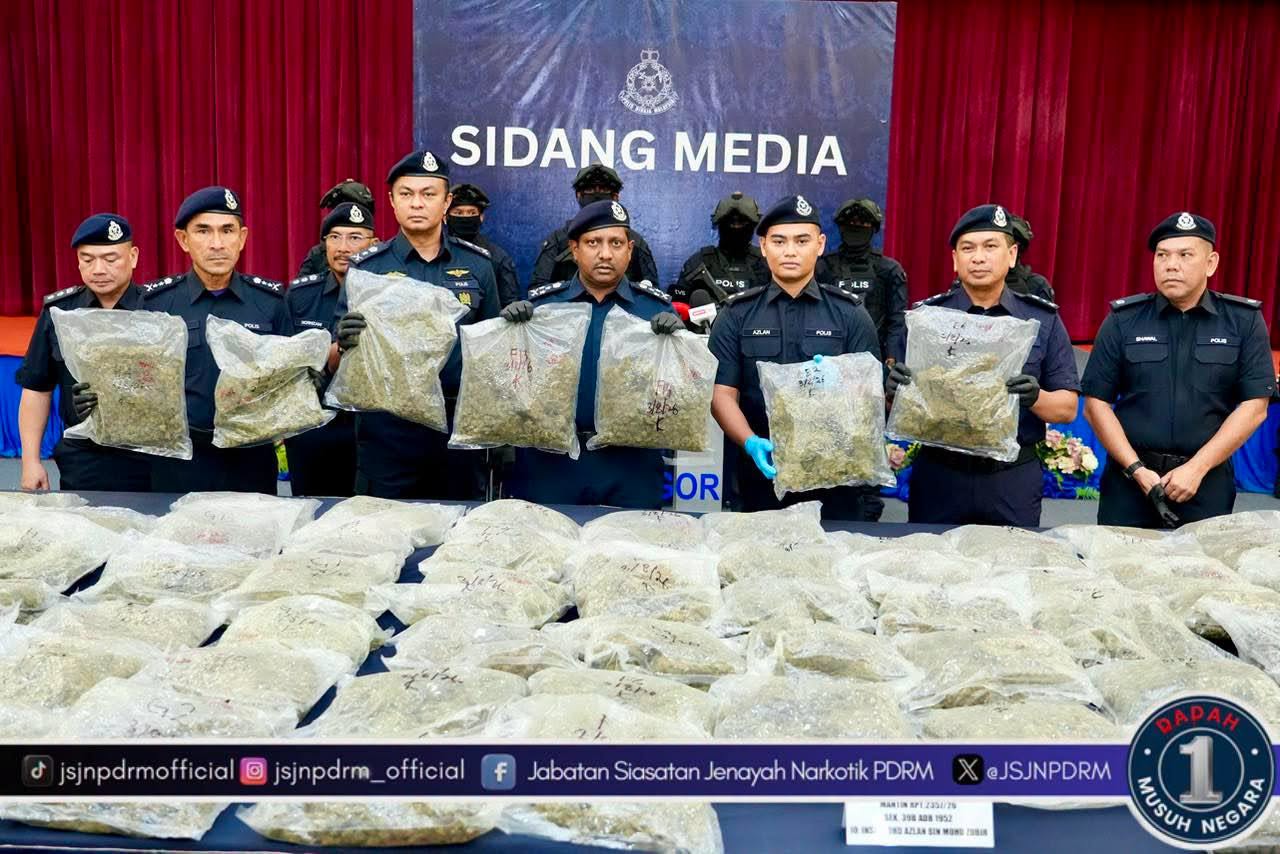
Photo Credit for Illustration Purpose Only — Credit to Jabatan Siasatan Jenayah Narkotik Bukit Aman Facebook






Leave a Reply