
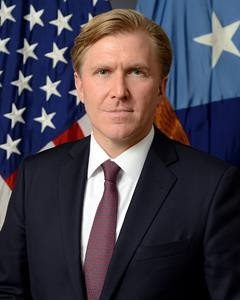
MANILA — The United States is seeking to deepen its security partnerships across Southeast Asia while demanding greater military contributions from allies and partners, as the Trump administration reshapes its regional strategy around deterrence, burden-sharing and national interest.
Under Secretary of War for Policy Elbridge Colby, speaking in Manila during his first official Southeast Asia trip in his current role, said Washington was not withdrawing from the region but was instead pursuing what he called “flexible realism” — a policy centered on military capability, strategic priorities and practical cooperation.
Philippines becomes centerpiece of U.S. strategy
The Philippines occupies a central position in the emerging U.S. regional architecture.
Colby described the alliance with Manila as undergoing a “historic modernization”, highlighting expanded military infrastructure, training, interoperability and the operationalization of sites under the Enhanced Defense Cooperation Agreement.
Washington also intends to support Philippine maritime security capabilities, including the rotational deployment of four U.S. Coast Guard Fast Response Cutters to work with the Philippine Coast Guard.
The strategic logic is to create a more capable Philippine defense posture while strengthening the ability of U.S. forces and Philippine forces to operate together.
For Manila, the approach offers stronger American military support but also comes with an expectation that the Philippines will continue investing in its own armed forces and maritime capabilities.
Thailand: Turning alliance ties into warfighting capability
With Thailand, Washington wants to move beyond traditional alliance symbolism.
Colby said the United States intends to transform established exercises into high-end, combat-credible training designed to test operational readiness and interoperability.
The approach reflects a broader Pentagon preference for judging alliances by measurable military outcomes rather than diplomatic declarations.
Thailand’s position as a long-standing U.S. ally gives Washington an established platform, but the challenge will be converting that relationship into a more modern and operationally relevant security partnership.
Indonesia: Strategic weight without dependency
Indonesia is being treated as a key pillar of Washington’s Southeast Asian strategy.
Colby described Jakarta as a “pivotal strategic actor” and said the newly established Major Defense Cooperation Partnership would focus on defense modernization, interoperability and expanded special-forces cooperation.
The administration’s objective is not to create Indonesian dependence on Washington, Colby said, but to strengthen Indonesia’s ability to defend its own vast archipelago.
That distinction is important to Washington’s broader regional model: U.S. partnerships should produce stronger sovereign states rather than permanent security dependencies.
Vietnam and Malaysia: Expanding cooperation without alliances
Vietnam and Malaysia represent a different category of U.S. engagement.
Neither is a U.S. treaty ally, but Washington sees opportunities to expand cooperation in areas where strategic interests overlap.
Colby emphasized maritime-domain awareness and capabilities that can help both countries protect their sovereign rights.
The approach allows Washington to strengthen security ties without requiring countries to adopt a formal alliance structure or align completely with U.S. foreign policy.
For Southeast Asian governments accustomed to maintaining strategic autonomy, that flexibility could make deeper defense cooperation more politically manageable.
Singapore: The model partner
Singapore was presented as an example of how Washington wants regional relationships to work.
Colby called the country the “ultimate model of pragmatic, business-like cooperation,” pointing to its support for U.S. rotational forces and its importance to American military access in the region.
The relationship demonstrates Washington’s preference for practical arrangements built around shared security and economic interests rather than ideological commitments.
Singapore’s role could become increasingly important as the United States seeks distributed access, logistics and military cooperation across the region.
Cambodia: Engagement through practical interests
Cambodia received less attention in Colby’s remarks, but Phnom Penh’s inclusion in his Southeast Asian itinerary signals that Washington does not intend to limit its regional strategy to formal allies or traditionally close partners.
The broader objective is to establish practical relationships across Southeast Asia while avoiding an all-or-nothing model of alignment.
That could provide Washington with greater diplomatic and security flexibility, particularly in dealing with governments that prefer to maintain broad external relationships.
A new model of U.S. power
The speech reflects a wider change in how the Trump administration wants American power to operate.
Colby repeatedly contrasted military capability with diplomatic symbolism, arguing that agreements and security frameworks matter only if they produce ships, ammunition, infrastructure, readiness and interoperability.
The United States therefore intends to strengthen its own forward posture while encouraging regional countries to expand their military capabilities.
At the center of the strategy is a proposed resilient denial-defense architecture along the First Island Chain, supported by distributed logistics and prepositioned assets.
The goal is to make military aggression increasingly difficult and costly while preserving space for diplomacy.
The geopolitical calculation
The strategy amounts to a new division of responsibility.
Washington is offering continued military presence, technology, training and access to its defense-industrial base. In return, Southeast Asian partners are being asked to spend more, modernize their forces and assume greater responsibility for protecting their own territory.
That could strengthen regional deterrence, but it also creates difficult choices for Southeast Asian governments.
Many countries in the region seek close security ties with the United States while simultaneously preserving strategic autonomy and avoiding exclusive alignment with any major power.
Colby’s emphasis on “partnerships, not protectorates” appears designed to address precisely that concern.
The administration is effectively arguing that stronger cooperation with Washington does not require surrendering sovereignty or abandoning other relationships.
What comes next
The test of the strategy will be implementation.
Washington will need to demonstrate that its increased regional commitment produces durable military capabilities, infrastructure and logistics rather than another cycle of strategic declarations.
At the same time, Southeast Asian governments will have to decide how far they are prepared to increase defense spending, accept deeper military interoperability and contribute to regional deterrence.
Colby’s message from Manila was therefore less a call for formal alignment than an offer of a new security bargain: a stronger American presence, stronger regional militaries and a greater sharing of responsibility.
His formulation — “strong and clear but quiet” — captures the administration’s intended posture: less emphasis on rhetorical declarations, and more on forward deployments, military readiness, industrial capacity and the ability to deter conflict through demonstrable strength.
Further reading — https://www.war.gov/News/Speeches/Speech/Article/4566924/remarks-by-under-secretary-of-war-for-policy-elbridge-colby-at-the-stratbase-in/




Leave a Reply