
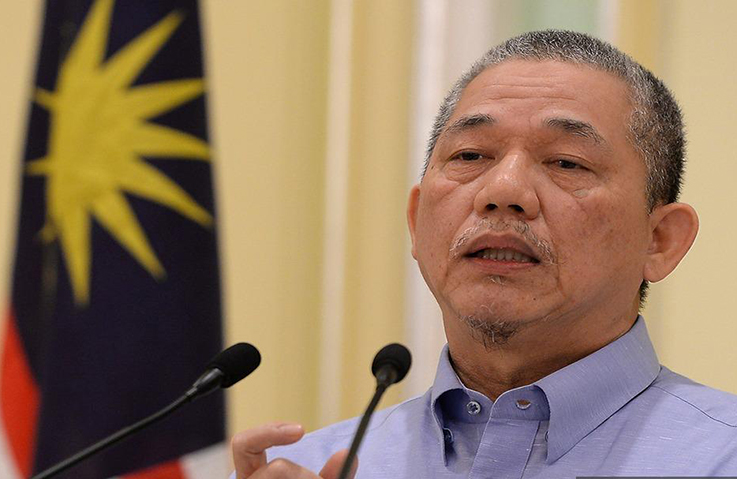
KUALA LUMPUR — Malaysia plans to repurpose the sites of retiring coal-fired power plants into renewable energy (RE) hubs and battery energy storage facilities under a proposed national coal site repurposing framework, deputy prime minister Fadillah Yusof said today.
He said the country’s existing coal fleet represented significant national infrastructure, including transmission connections, industrial facilities, and strategically located land.
“Rather than allowing these assets to become stranded, we should view them as opportunities to create new economic value.“Selected sites possess strong potential to be transformed into renewable energy hubs, battery energy storage facilities, and other clean energy developments that continue contributing to local economies while supporting our national transition objectives,” he said when delivering his address at the closing ceremony of the World Economic Forum’s “Malaysia’s Energy Future: Power Sector Decarbonisation Deep Dive” here.
Fadillah, who is also the energy transition and water transformation minister, said the proposed framework outlined in the World Economic Forum’s insight paper, “Beyond Coal: Building a Flexible, Resilient, and Clean Power System for Malaysia”, would provide a foundation for continued engagement between the government, regulators, utilities, investors, and local communities.
He said every retiring power station presented an opportunity to create new industries, attract investments, and prepare the workforce for the economy of the future.
Fadillah also said Malaysia remained committed to its target of not building any new coal-fired power plants, transitioning away from coal-fired electricity generation by 2044, and achieving 70% RE installed capacity by 2050.
He said RE deployment must progress ahead of coal retirement to avoid replacing coal dependence with greater reliance on imported liquefied natural gas (LNG).
“This is a critical consideration. Should renewable deployment fail to keep pace, there is a real risk that coal dependence may simply be replaced by greater reliance on imported LNG, exposing Malaysia to fuel price volatility and external geopolitical uncertainties.“A successful transition must therefore reduce dependence, not merely shift it from one imported fuel to another,” he said.
To support the transition, he said the energy transition and water transformation ministry continued to prioritise large-scale solar deployment, the Corporate Renewable Energy Supply Scheme, battery energy storage systems, and smart grid modernisation.
On regional cooperation, Fadillah reaffirmed Malaysia’s commitment to advancing the Asean Power Grid and expanding cross-border electricity trade to strengthen regional energy security and facilitate greater RE integration.
He said the country would continue exploring long-term low-carbon energy options, including advanced nuclear technologies and small modular reactors, while ensuring that safety, robust governance, regulatory preparedness, and public confidence remain paramount.
–Bernama



Leave a Reply